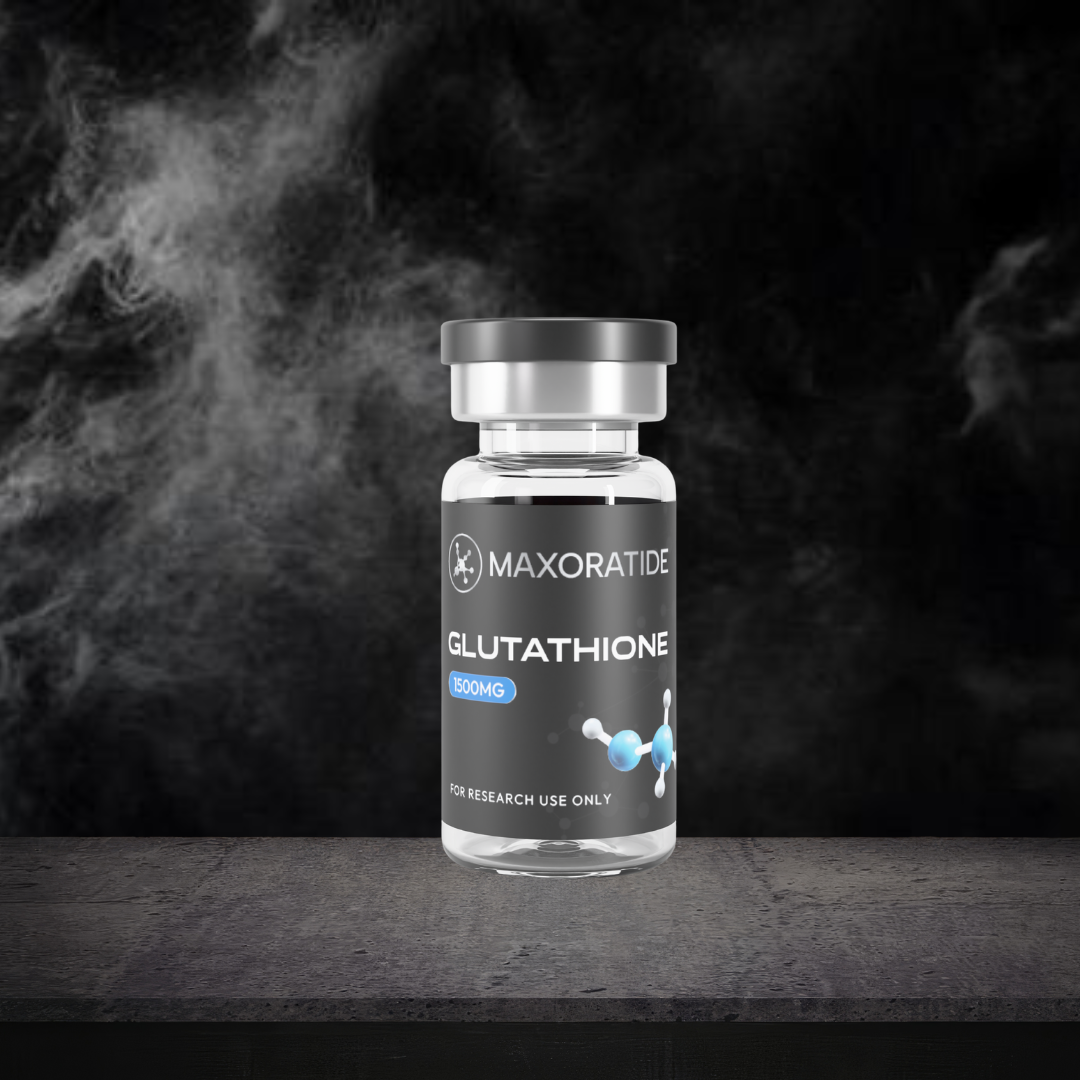
Glutathione: The Master Antioxidant
The Maxoratide Glutathione Peptide (GSH) is a high-purity, lyophilized formulation of an endogenous tripeptide composed of cysteine, glutamate, and glycine. Commonly described in scientific literature as the “master antioxidant,” it is naturally present in nearly all mammalian cells at high intracellular concentrations.
Unlike synthetic compounds, glutathione plays a fundamental role in maintaining intracellular redox balance. Research interest is primarily centered on its capacity to protect cellular structures from oxidative stress induced by reactive oxygen species (ROS), heavy metals, and free radical damage.
Glutathione Mechanism: Detoxification & Cellular Protection
In laboratory research, glutathione is primarily studied through two key functional pathways:
- Direct Radical Neutralization: The sulfhydryl (–SH) group of the cysteine residue acts as a direct scavenger of free radicals, neutralizing them before they can damage DNA, proteins, or lipid membranes.
- Phase II Detoxification: Glutathione serves as a critical substrate for glutathione S-transferase (GST), an enzyme that conjugates toxins and xenobiotics, converting them into water-soluble forms for elimination. This pathway is widely studied in relation to hepatic function and cellular detoxification processes.
Research Applications & Storage
This compound is supplied as a stable lyophilized powder to minimize oxidation during storage and transport. For laboratory use, it should be reconstituted with sterile bacteriostatic water under controlled conditions. Once prepared, glutathione is highly susceptible to oxidation and should either be used promptly or stored at 2–8°C to preserve stability.
Research Disclaimer
Maxoratide Glutathione Peptide is intended strictly for in-vitro laboratory research and analytical purposes only. It is not approved for human consumption, diagnostic, or therapeutic use.